
Marshall County Sex Offender Checks
The Tennessee Sex Offender Registry is the primary public search for Marshall County. TBI manages the statewide system. It supports person searches and geographic routes using county, city, ZIP or address, plus map or location tools shown in the live interface. Use the state registry first, then contact the Marshall County Sheriff's Department for local registration or compliance questions. NSOPW supplies a separate national layer when a location or person may cross state lines.
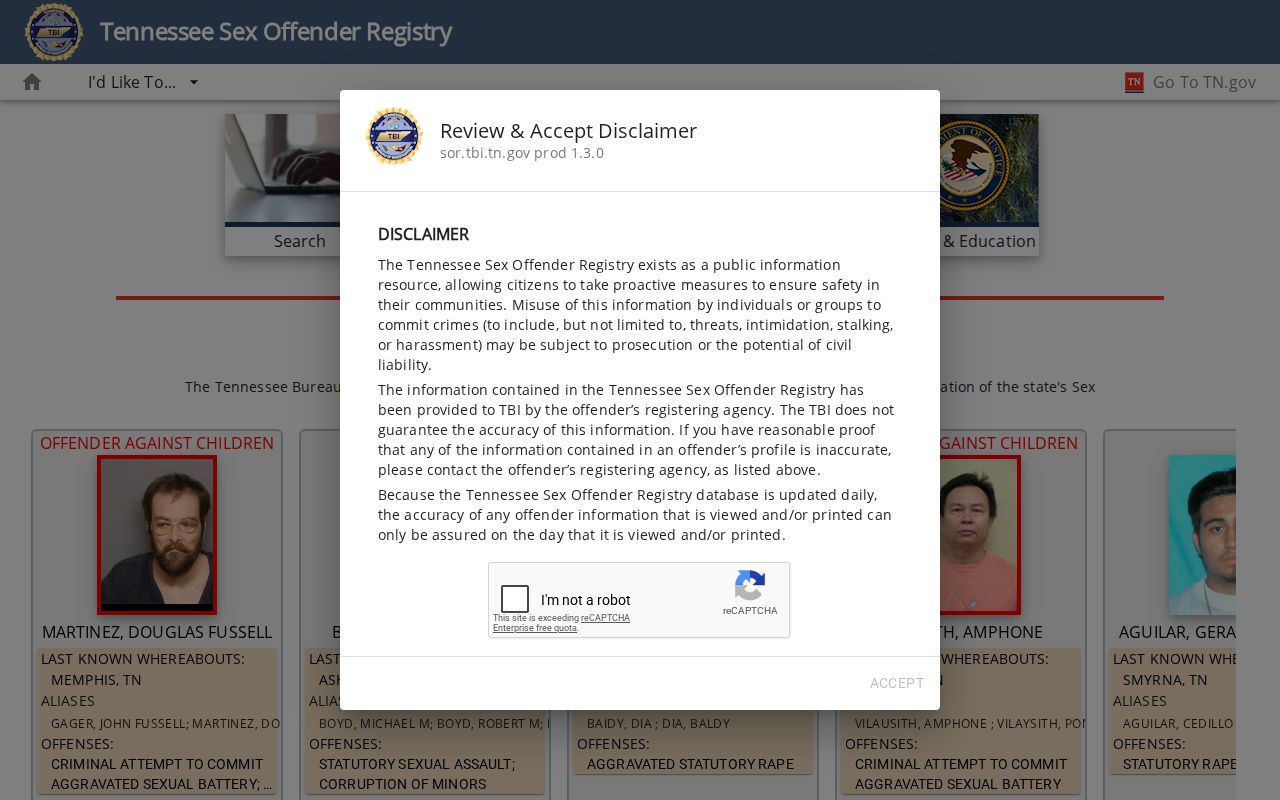
The captured registry landing page is the official starting point, not a private directory. Search with the narrowest reliable details and compare the result's aliases, physical description, address, offense, status, and responsible agency. A partial name or broad map can return more than one possible person or place, so do not infer identity from one shared field.
Marshall County Registry Office
The Marshall County Sheriff's Department is the local registration office. It is at 209 First Avenue North, Lewisburg, TN 37091, and the main number is (931) 359-6122. Published official sources did not provide separate registry hours, appointment rules, a fee, or a dedicated compliance-reporting line. Call before visiting and ask for the staff member who handles sex offender registration. Confirm the current appointment process and which documents the office requires.
Marshall County Sheriff's Department
209 First Avenue North
Lewisburg, TN 37091
(931) 359-6122
Call for registry hours and appointments.
TBI directs suspected noncompliance to local law enforcement. Provide a precise concern rather than attempting to confront anyone. The sheriff can determine whether an address update, reporting duty, or warrant issue needs official review. The public registry is an information source, while compliance work belongs to law enforcement.
Tennessee Sex Offender Registry Searches
The Tennessee registry is dynamic, so visible controls can change. The documented routes include a name search and geographic searches by county, city, ZIP or address. Map and list-style results help a reader examine Marshall County by location. Accept the site's conditions, choose the route that fits the known facts, and then read the complete profile rather than relying on a marker or short result row.
- Open the official Tennessee registry and review its terms and misuse warning.
- Search by name, or select Marshall County and add a city, ZIP, address, or map location where the live form permits.
- Compare aliases, physical details, status, classification, and responsible agency before deciding a result may match.
- Open the full profile and read the offense, statutory citation, addresses, history, and reporting information in context.
| Field or control | Type | Required | Use |
|---|---|---|---|
| Name | Text | Route dependent | Person search; review aliases on the profile |
| County | Select | No | Limit geographic results to Marshall County |
| City | Text or select | No | Narrow a county search to a municipality |
| ZIP or address | Text | No | Build a location-based search |
| Map or location | Interactive map | No | Review map and list-style geographic results |
Search controls should be checked live because the dynamic client can change. Keep Marshall County selected when the goal is a county view, and expand to NSOPW only when the question reaches beyond Tennessee.
Marshall County Registry Status Terms
Status is not the same as classification. TBI's official vocabulary includes Active, Active-Incapacitated, Active-Interstate Compact Act, Absconder, Inactive-Incarcerated, Inactive-Deported, Inactive-Deceased, Inactive-Moved to Another State, and Inactive-Juvenile. Read the full phrase. “Inactive” can reflect several very different circumstances and should not be paraphrased as a finding that registration duties simply ended.
The official Tennessee registry help system defines status and reporting fields.
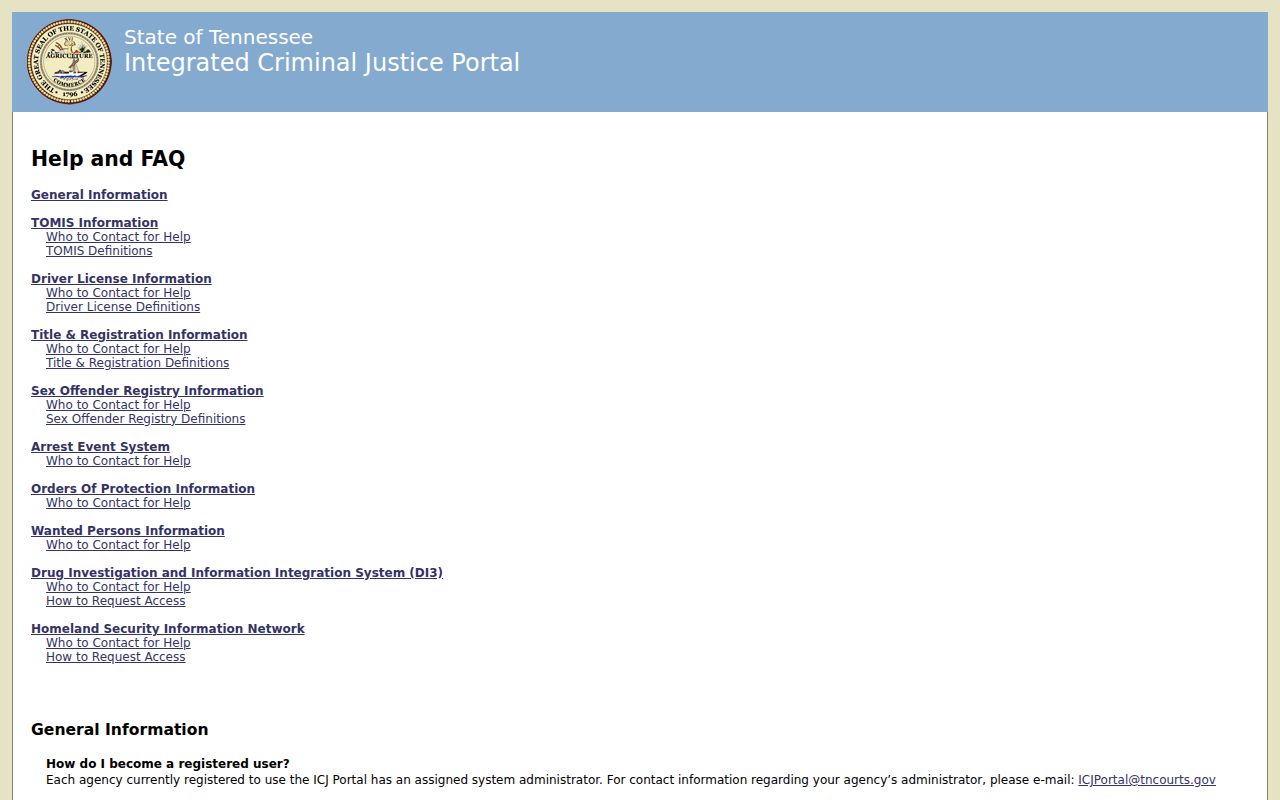
The captured help page also explains date of entry, agency, officer, reporting type, warrant-check indicators, and criminal-history-check indicators. Reporting types include Initial Registration, Annual Sexual Offender, Quarterly Violent Offender, Information Updated, and Previously Registered. These labels explain a profile's administrative history; they do not replace the underlying court judgment.
Registry Profiles: What They Show
A public Marshall County registry profile combines identity, location, offense, and registration data. It can show the statutory offense and a criminal-history table, but the registry exists because a qualifying registration duty applies. It is not a full account of every court event. Verify a disputed conviction or disposition with the court that issued the judgment.
| Name & Aliases | Lists the registered name and alternate names associated with the profile. |
|---|---|
| Photo & Description | May show a photograph, physical descriptors, offender ID, and other identifying fields. |
| Address & Agency | Shows primary or secondary addresses and the agency responsible for the entry. |
| Offense & Statute | Gives offense date, description, Tennessee code, and related statutory text. |
| Classification | Identifies sexual offender or violent sexual offender status and applicable statutory category. |
| Registration Status | Uses TBI terms such as Active, Absconder, or a specific Inactive status. |
| Criminal-History Table | Can list dates, charges, and dispositions associated with the public record. |
An absent profile is not conclusive. The offense may not require registration, a conviction may have been overturned, termination may have occurred, a juvenile record may be nonpublic, the person may have moved, or noncompliance may be involved. Report a concrete compliance concern to the sheriff rather than making a public accusation.
Cross-State Marshall County Registry Checks
Use the Tennessee registry for the most direct state record and Marshall County filter. Use the U.S. Department of Justice's NSOPW when the relevant address, travel, or prior residence may cross state lines. NSOPW searches participating jurisdictions and can widen the geographic scope, but its result still needs to be read against the source jurisdiction's official profile and definitions.
The National Sex Offender Public Website provides the federal cross-jurisdiction search.
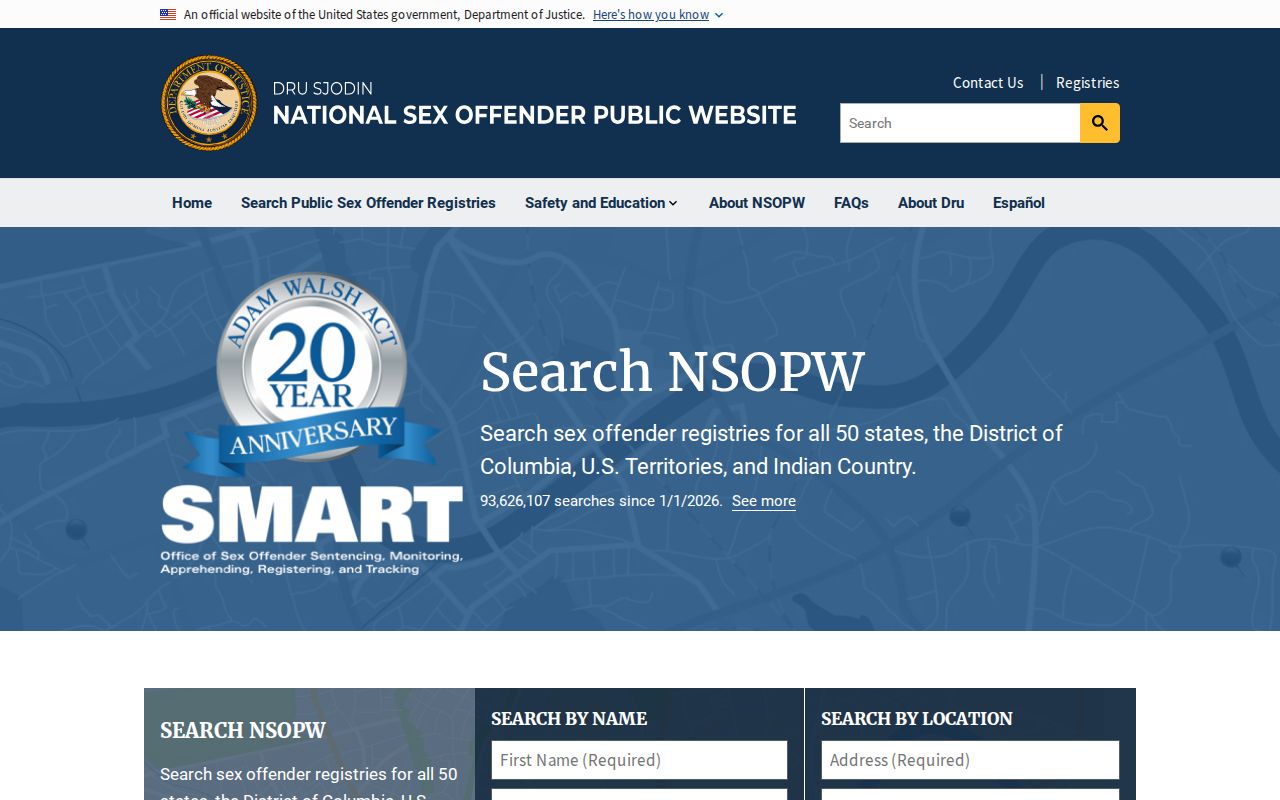
The NSOPW capture marks the official national layer. It does not turn Tennessee's classification scheme into a federal tier display, and it does not replace the Marshall County sheriff's registration role. When a national result points back to Tennessee, use the TBI profile for the state's current status and reporting detail.
Registration Levels and Duties in Tennessee
Tennessee's public scheme uses statutory classifications and duration rules, not a simple public federal Tier I, II, and III display. A sexual offender who is not in a lifetime category may request termination after ten years from sentence expiration if no disqualifying new conviction exists and substantial compliance is shown. Removal is not automatic. Violent sexual offenders and other listed categories generally remain registered for life.
| Tennessee classification | Duration or public treatment | Reporting context |
|---|---|---|
| Sexual offender, non-lifetime | May request termination after 10 years from sentence expiration if statutory conditions are met | Official help identifies annual reporting |
| Violent sexual offender | Lifetime; no ordinary termination route | Official help identifies quarterly reporting |
| Victim under 13 statutory category | Lifetime | Duties follow the applicable statute |
| Second or later qualifying conviction | Lifetime under the cited statutory category | Duties follow classification |
| Certain out-of-state registrant | 10 years after sentence expiration or 5 years after entering Tennessee, whichever is later | Subject to the current statute |
| Violent juvenile sexual offender | Special rules; not shown on the public website | Nonpublic public-site treatment |
Exact duties depend on the governing statute and current classification. The reporting labels in TBI help give context, but the sheriff should confirm a Marshall County registrant's current check-in process. Do not infer a reporting breach from a date field without agency review.
Marshall County Registry Termination Requests
A ten-year mark does not itself remove a profile. A qualifying person must submit a written termination request with support and meet the statutory conditions, including substantial compliance and the absence of a disqualifying new conviction. Lifetime classes do not use the ordinary termination path. Certain out-of-state registrants follow the later of the Tennessee time measures described in the statute.
The TBI registry information and FAQ page links the statutory rules, termination information, and lawful-use warning.
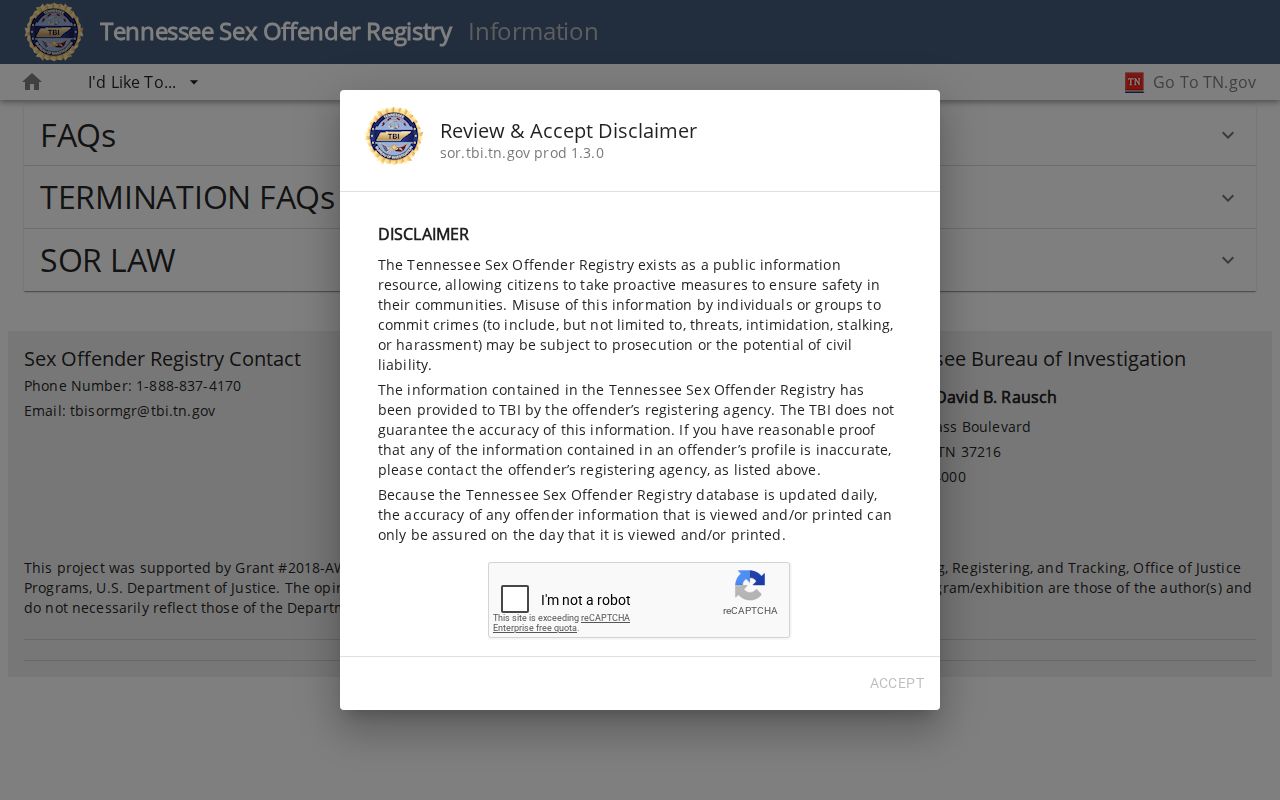
The FAQ capture underscores that expungement and registry removal are separate processes. When a qualifying conviction has been overturned or expunged, supporting court documents should accompany the written request to TBI or the registering agency. A vanished county case index entry alone does not prove the statewide registration duty ended.
Report Marshall County Noncompliance
Suspected noncompliance belongs with law enforcement. Contact the Marshall County Sheriff's Department at (931) 359-6122 and describe the specific issue. Useful facts can include the public profile, the address or status field at issue, the date observed, and why the information may be stale. Do not investigate by approaching a registrant or household.
An “Absconder” label and an absent profile are not interchangeable. TBI defines statuses, and only the agency can assess current compliance. A missing profile can arise from lawful termination, an overturned conviction, a move, nonpublic juvenile treatment, or an offense outside the registry statute. Let the sheriff and TBI resolve the record.
Using Registry Information Lawfully
Registry information supports awareness and personal or family safety planning. Use it to understand an official public record, not to impose a new sanction. T.C.A. §§ 40-39-201 through 40-39-218 establish the registry, public fields, duties, restrictions, and penalties. The TBI warning states that misuse to inflict retribution or added punishment, or to harass, stalk, or threaten a registrant or family member, can violate civil and criminal law.
Misuse can be a crime: Do not use Tennessee registry information to harass, stalk, threaten, intimidate, or inflict retribution or added punishment on a registrant or household.
Check the profile's current status and responsible agency before acting on safety concerns. Report an immediate threat through the proper emergency channel and a registration concern through the sheriff. The broader Marshall County criminal history resource explains how registry data differs from arrest, court, and TBI name-check records.